
Introduction
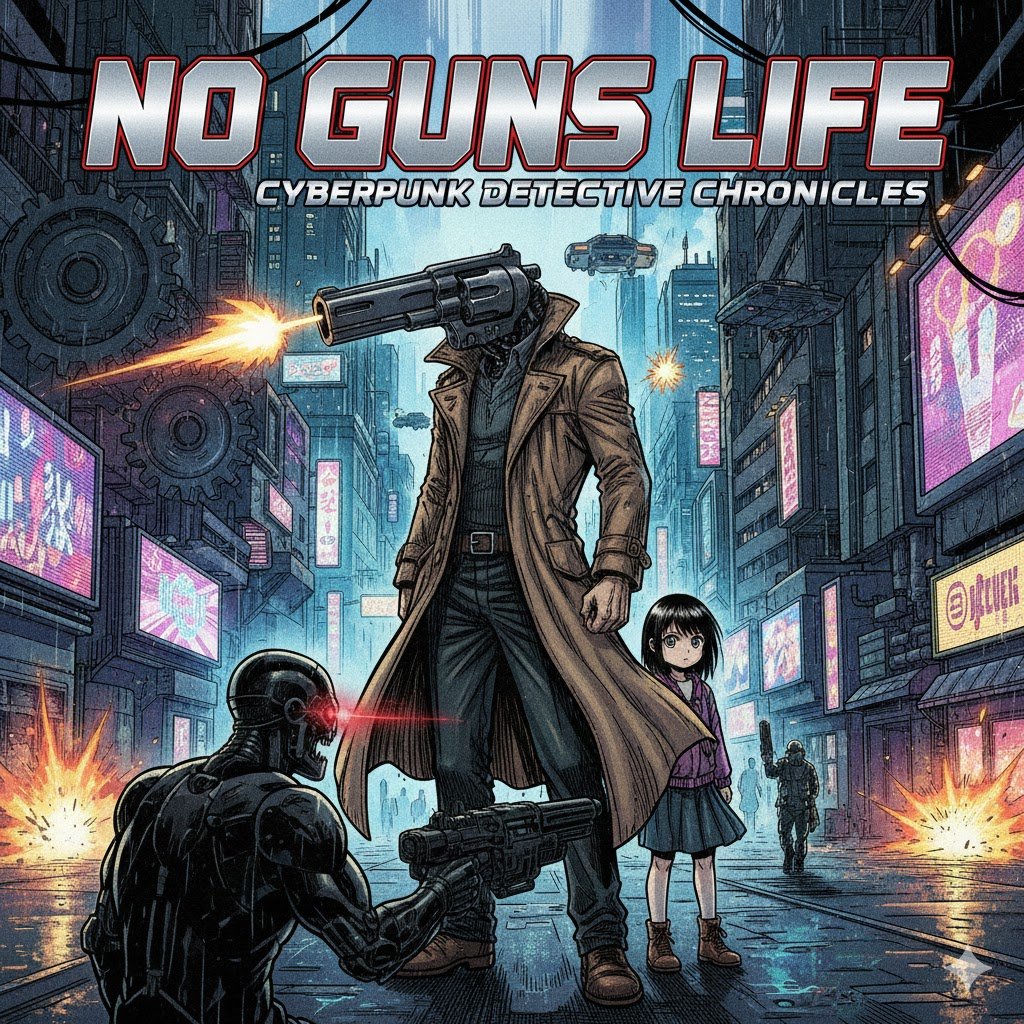
There’s something instantly gripping about no guns life. Maybe it’s the image of a man with a literal gun for a head walking through neon-lit streets. Maybe it’s the slow-burn storytelling that mixes detective noir with cyberpunk aesthetics. Or maybe it’s the haunting question: what does it mean to be human when technology reshapes your very body?
At first glance, no guns life seems like pure action. Steel limbs, corporate conspiracies, and shadowy figures dominate the cityscape. But look closer, and it’s about identity, memory, and survival in a world that has forgotten how to treat its people as people. That tension hits harder than any bullet ever could.
The World of No Guns Life
Set in a gritty post-war metropolis, no guns life explores a society where technology has transformed humans into living weapons. Individuals called “Extended” have mechanical modifications, ranging from enhanced limbs to full-body upgrades. Among them stands Juzo Inui, a man with a revolver for a head, carrying a past he can’t fully escape.
The city itself feels alive yet decayed. Neon signs flicker over cracked concrete streets. Corporations pull the strings from towering skyscrapers, and ordinary citizens struggle in their shadows. It’s a perfect blend of noir atmosphere and cyberpunk despair, thick with tension and intrigue.
The Concept Behind No Guns Life
At its core, no guns life examines the consequences of unchecked technological advancement. After a devastating war, soldiers were modified into living weapons. When peace returned, many of these enhanced individuals were left to navigate a society that feared them.
This tension drives the narrative. Juzo works as a resolver, solving problems tied to Extended conflicts. But every case drags him deeper into conspiracies tied to the corporations that created him. It’s not just a job—it’s a slow unraveling of a much larger truth.
Meet the Main Characters
Juzo Inui anchors the story with a stoic, commanding presence. Beneath his mechanical exterior lies a personality shaped by trauma, resilience, and stubborn morality. He’s not flashy or overly emotional, but his actions speak volumes.
Supporting him is Tetsuro Arahabaki, a young boy connected to mysterious technology. Then there’s Mary Steinberg, a compassionate and brilliant mechanic who repairs Extended bodies. Together, they navigate danger, uncover hidden truths, and confront moral dilemmas.
Themes That Drive No Guns Life
No Guns Life is more than cybernetic battles. It dives into deep themes that linger long after episodes end. Identity stands at the forefront. When your body is altered beyond recognition, who are you really?
Corporate control is another central theme. Powerful organizations manipulate technology and people alike, prioritizing profit over humanity. The series challenges viewers to question blind trust in innovation and consider the human cost of progress.
Visual and Artistic Style
The visual style of no guns life is striking and deliberate. Shadows dominate the frame, and neon lights punctuate the dark cityscape. Each panel feels alive with tension and atmosphere, emphasizing both scale and intimacy.
- Heavy noir influence shapes lighting and composition.
- Muted color palettes contrast with bright neon highlights.
- Character designs emphasize mechanical details and realism.
- Action sequences balance brutality with precise choreography.
The show’s look is brooding and immersive, drawing viewers into a world where steel and smoke collide.
Why Fans Connect with No Guns Life
Even in a world filled with mechanical bodies, the emotions feel authentic. Viewers connect with struggles for acceptance, identity, and purpose.
- Themes of alienation and self-discovery resonate deeply.
- The exploration of moral dilemmas mirrors real-world ethical challenges.
- Complex character development encourages emotional investment.
- Noir tone offers a fresh perspective compared to mainstream anime.
Symbolism in No Guns Life
The Gun Head
Juzo’s revolver head symbolizes dehumanization. Designed as a weapon, he must reclaim agency in a society that views him as a tool.
Extended Technology
Mechanical enhancements highlight society’s obsession with “improvement” at any cost. Progress, while impressive, leaves emotional and ethical damage in its wake.
Corporate Towers
Skyscrapers symbolize unchecked authority. They loom over the city, a reminder of who truly holds power and the fragility of human autonomy.
Action and Emotional Balance
No Guns Life blends intense combat with quiet, reflective moments. Gunfights and mechanical clashes grab attention, but it’s the pauses between them that linger. Watching Juzo contemplate his past, smoke curling around him, the story reveals its emotional depth.
The balance prevents the narrative from becoming one-dimensional. The rhythm of tension and introspection makes every explosive scene more impactful, keeping viewers emotionally invested.
Cultural and Genre Impact
Within the cyberpunk genre, No Guns Life stands out for its combination of noir aesthetics and character-driven storytelling. Many similar series prioritize high-tech spectacle, but this show emphasizes human emotion alongside technological marvels.
It also sparks thought about body modification and identity. As real-world technology evolves, the series raises questions about humanity, autonomy, and the ethics of enhancement. The underlying social commentary keeps it relevant beyond entertainment.
Frequently Asked Questions
What is no guns life about?
It follows Juzo Inui, a mechanically enhanced resolver, navigating a cyberpunk city rife with corporate conspiracies and personal struggles.
Is no guns life only action?
No. While it includes action, the series focuses on identity, autonomy, and societal control.
Who created the No Guns Life manga?
Tasuku Karasuma is the author and illustrator of the original manga series.
How many anime seasons are there?
The anime adaptation has two seasons.
Why does the protagonist have a gun for a head?
It symbolizes his former life as a weapon and reflects themes of dehumanization and identity struggle.
Conclusion
No Guns Life is more than cyberpunk spectacle. It presents a layered narrative about identity, autonomy, and survival in a technologically altered society. Through its brooding atmosphere and complex characters, it challenges viewers to consider what truly makes us human. The mechanical exterior hides deeply human struggles, making every episode resonate emotionally. Ultimately, no guns life proves that even in a world dominated by steel, the heart remains essential.