
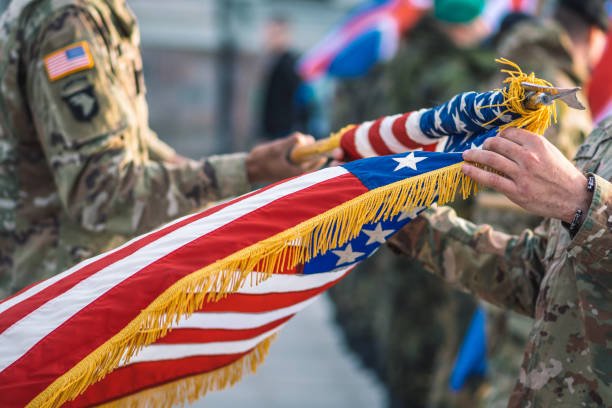
What Is NATO
NATO stands for the North Atlantic Treaty Organization. It is a political and military alliance made up of countries from Europe and North America. Its central purpose is to protect the freedom and security of its members through political cooperation and, when necessary, military means. The alliance says its most fundamental principle is collective defence, meaning that an attack on one member is treated as an attack on all.
This idea is based on Article 5 of the North Atlantic Treaty. Article 5 does not force every country to respond in exactly the same way, but it does require each member to assist when another member is attacked. That support can include military action, but it can also involve other steps that allies believe are necessary to restore security.
The alliance is not only about war. It is also a forum where member states consult on political and security issues, share intelligence, coordinate defence planning, and work together to manage crises. In that sense, it acts both as a shield and as a platform for strategic cooperation.
NATO History and Why It Was Created
The alliance was created on April 4, 1949, in the aftermath of the Second World War. At that time, many countries in Europe were rebuilding, and there was deep concern about future instability and the risk of aggression. The treaty brought together countries on both sides of the Atlantic to form a shared security framework. Its early goal was simple but powerful: protect peace and deter conflict.
The original 12 members were Belgium, Canada, Denmark, France, Iceland, Italy, Luxembourg, the Netherlands, Norway, Portugal, the United Kingdom, and the United States. Over time, the alliance expanded through several rounds of enlargement. According to NATO’s official records, membership has grown from 12 to 32 countries through 10 rounds of enlargement. Sweden became the latest member on March 7, 2024.
This growth reflects how the alliance has adapted to changing global realities. During the Cold War, its role focused heavily on deterring the Soviet Union. After the Cold War, the alliance shifted toward crisis management, peace support, partnership building, and new security challenges such as terrorism, cyber threats, and hybrid warfare. Today, its work combines traditional defence with broader security cooperation.
NATO Members and How the Alliance Has Expanded
As of 2026, the alliance has 32 member countries. NATO states on its official member countries page that these allies are sovereign states that come together to discuss political and security issues and make collective decisions by consensus. That word matters. The alliance does not operate like a single country with one ruler. Instead, decisions are made together, which means agreement among allies is essential.
The current members are Albania, Belgium, Bulgaria, Canada, Croatia, Czechia, Denmark, Estonia, Finland, France, Germany, Greece, Hungary, Iceland, Italy, Latvia, Lithuania, Luxembourg, Montenegro, the Netherlands, North Macedonia, Norway, Poland, Portugal, Romania, Slovakia, Slovenia, Spain, Sweden, Türkiye, the United Kingdom, and the United States.
Expansion has often been one of the most debated parts of the alliance’s history. Supporters see enlargement as a way to strengthen regional security and widen the zone of democratic stability. Critics sometimes argue that expansion can increase tensions with rival powers. Even so, the official open door policy remains part of the treaty framework, and the alliance says any European country able to meet the obligations of membership may be invited to join.
How NATO Works in Practice
The alliance works through consultation, planning, and shared commitments. Member countries maintain their own armed forces, but they train together, set common standards, and coordinate defence strategies. This allows them to operate more effectively together when needed. The alliance also has civilian and military structures that support policy, planning, command, and operations.
One important feature is consensus decision making. Each member has a voice, and major decisions are not imposed by majority vote. This can make the process slower, but it also ensures that allied action reflects joint political agreement. That is one reason the alliance has lasted so long. It is not just a military pact. It is also a political community built on consultation.
The Secretary General is the top international civil servant of the alliance and helps guide consultation among members. Mark Rutte became the 14th Secretary General on October 1, 2024. His role includes chairing key meetings, helping build consensus, and representing the alliance publicly.
NATO and Article 5 Explained
Article 5 is the most famous part of the treaty because it captures the alliance’s core promise. If one member is attacked, all members are expected to assist. This principle is meant to deter aggression before it even happens. Potential adversaries know that attacking one ally could trigger a response from the entire alliance.
It is also important to understand what Article 5 does and does not mean. It does not automatically force every ally to declare war in the same manner. The treaty language allows each member to take the action it deems necessary. That flexibility is part of why the clause has remained politically workable across many decades and very different international crises.
The collective defence clause has only been invoked once in the alliance’s history, after the terrorist attacks of September 11, 2001, against the United States. This fact is often surprising to people who assume it has been triggered many times. In reality, the clause has enormous symbolic and strategic value even when it is not formally invoked. Its power lies in deterrence.
NATO’s Role in Today’s Security Environment
In 2026, the alliance remains central to transatlantic security. Its official statements continue to emphasize collective defence, deterrence, and the protection of allied populations and territory. Recent declarations also highlight support for freedom, democracy, and the transatlantic bond.
Modern security challenges are broader than conventional warfare alone. The alliance now works on cyber defence, resilience, emerging technologies, terrorism, strategic competition, and the protection of critical infrastructure. The security environment has become more complex, and the alliance has evolved to meet that reality.
Another major focus is burden sharing and defence investment. Across recent years, leaders have repeatedly stressed the need for stronger defence capabilities, faster industrial production, and closer coordination. The continuing urgency of security concerns in Europe has pushed defence back to the center of political debate in many member states.
The alliance also continues to work with partner countries outside its formal membership. These partnerships are part of its wider approach to regional and global stability. NATO’s official materials note cooperation with partners in several regions, including the Middle East through frameworks such as the Istanbul Cooperation Initiative.
NATO Strengths, Criticism, and Ongoing Debate
One of the alliance’s biggest strengths is credibility. Because it links North America and Europe under a shared defence commitment, it carries strategic weight that few organizations can match. It also offers practical advantages, such as joint exercises, planning, intelligence sharing, and interoperability between armed forces. These elements make cooperation more effective during crises.
At the same time, the alliance is often criticized. Some critics argue that it can deepen geopolitical rivalry, especially when enlargement becomes a flashpoint. Others say internal differences among member states can make decision making slow. There are also recurring debates over whether all allies contribute fairly to defence. These criticisms do not mean the alliance is weak, but they do show that it is a living political organization shaped by negotiation and competing priorities. This assessment is an interpretation based on the alliance’s consensus structure, enlargement history, and repeated emphasis on defence investment.
Still, its survival across decades of global change suggests remarkable adaptability. From the Cold War to terrorism, and from regional crises to new technological threats, the alliance has repeatedly adjusted its strategy while keeping its basic mission intact.
Why NATO Still Matters
The world in 2026 is not the world of 1949, yet the alliance still matters because the need for credible security guarantees has not disappeared. Large scale conflict, strategic rivalry, and uncertainty in international politics remain real concerns. In that environment, a durable alliance built on consultation and collective defence continues to carry enormous significance.
For smaller member states, the alliance offers reassurance that they are not alone. For larger powers, it creates a framework for coordinated leadership. For all members, it provides a structure that combines political dialogue with military readiness. That mix helps explain why it remains one of the most influential alliances in modern history.
Conclusion
NATO is far more than a military label or a headline term in world news. It is a long standing political and security alliance built on the principle that shared defence creates stronger peace. Since 1949, it has expanded from 12 countries to 32, adapted to new threats, and maintained its central promise of collective protection. In 2026, under Secretary General Mark Rutte, the alliance continues to play a major role in shaping transatlantic security and responding to modern challenges. Whether one views it mainly as a deterrent force, a diplomatic forum, or a symbol of strategic unity, its importance in global affairs is impossible to ignore.
FAQs
1. What does NATO stand for?
NATO stands for the North Atlantic Treaty Organization. It is a political and military alliance linking countries in Europe and North America.
2. How many members does NATO have in 2026?
It has 32 member countries. Sweden became the latest member on March 7, 2024.
3. What is Article 5 in NATO?
Article 5 is the collective defence clause. It says that an armed attack against one member is considered an attack against all, and each ally must assist.
4. Who is the current Secretary General of NATO?
Mark Rutte is the current Secretary General. He took office on October 1, 2024.
5. Has Article 5 ever been used?
Yes. It has been invoked once, in response to the September 11, 2001 terrorist attacks against the United States.